


When I was sixteen years old, I helped a friend get an abortion. Growing up in Massachusetts, we had good sex education and access to contraceptives, but accidents happened. My friend was scared to tell her parents and needed someone to help her. I had a job and lent her the money needed for the procedure.
A few years later, during college, I found myself in a similar situation. Despite using contraception, I became pregnant. I knew I wasn’t ready to have a child, so I made the difficult decision to have an abortion. The experience was confusing and overwhelming, especially when I learned I was further along than I thought. I had to travel to a different clinic hours away, which would have been an insurmountable barrier without the support and resources I had.
These experiences were transformative, shaping my understanding of reproductive rights as deeply personal choices that every individual deserves to make freely. However, the current legal landscape is making these choices increasingly complicated. My story is not unique, yet the stigma and silence around abortion persist, as access to reproductive care is under assault across the United States.
Reproductive health care extends far beyond the decision to terminate a pregnancy. I learned this firsthand during a wanted pregnancy that ended in miscarriage. I needed a dilation and curettage (D&C) procedure, a common method to treat incomplete miscarriages, but one that’s now entangled in the politics of abortion bans. In states like Texas and Missouri, doctors may hesitate to perform D&Cs due to fear of prosecution under laws that criminalize abortion procedures even in cases where the fetus is no longer viable.
This fear doesn’t just impact those seeking abortions but anyone who might experience pregnancy complications. Miscarriages and ectopic pregnancies require prompt medical intervention, yet restrictive laws can delay care until a woman’s life is in danger. It’s a chilling reminder that the consequences of these laws are far-reaching, placing everyone with a uterus at risk, whether they seek an abortion or not.
And it’s not just abortion rights under threat. As states increasingly define personhood as beginning at fertilization, in vitro fertilization (IVF) and other assisted reproductive technologies are also at risk. Laws like those proposed in Alabama and Georgia could grant embryos full legal rights, complicating decisions about unused or non-viable embryos. This has significant implications for couples undergoing fertility treatments, as the creation and handling of multiple embryos are standard practices aimed at maximizing success rates.
If all embryos are granted legal personhood, parents and health care providers could face criminal or civil liability for discarding non-viable embryos or choosing not to implant them. These restrictions would fundamentally alter the landscape of fertility treatment, potentially making IVF inaccessible or legally perilous. Families could find themselves ensnared in legal battles over the status of their embryos, unsure of their rights and options.
The 2024 election is shaping up to be a critical juncture for reproductive rights in the United States. Voters in several states will decide on ballot measures that could either expand or restrict access to abortion and reproductive health care:
- Maryland, Arizona, Colorado, Missouri, and Montana will vote on a constitutional amendment guaranteeing the right to reproductive freedom, including abortion.
- Nebraska will have competing amendments, one protecting abortion rights up to viability and another aiming to uphold the current 12-week ban.
- New York and Nevada are looking to enshrine abortion protections in their state constitutions, offering a counterbalance to restrictive measures elsewhere.
- Florida and South Dakota are battlegrounds, where activists are pushing for measures to overturn or modify current restrictive laws.
These votes will play a pivotal role in determining whether states become safe havens for reproductive rights or extend existing restrictions. The outcome could mean the difference between accessible, safe health care or the perpetuation of a patchwork system where one’s ZIP code dictates the quality and availability of care.
Conservative think tanks are already preparing for a scenario where they control Congress and the White House. Project 2025 is a comprehensive plan that aims to roll back reproductive rights on a national level. It includes proposals to revoke FDA approval of mifepristone—a key medication for early abortion care—and to restrict insurance coverage for contraception, particularly emergency options like the “week-after” pill.
This initiative also seeks to prosecute those who distribute abortion pills through the mail, using the long-dormant Comstock Act, which criminalizes the mailing of any “obscene” material, including contraceptives and abortion-inducing drugs. Project 2025 is more than just an anti-abortion agenda; it’s an attempt to reshape reproductive health care according to a narrow religious ideology, imposing severe barriers to access even in states where abortion remains legal.
Funding for so-called crisis pregnancy centers (CPCs) is another battleground. These centers, which do not provide comprehensive health care, often receive federal and state funding under the guise of family health support. In reality, they aim to dissuade people from choosing abortion through misinformation and emotional pressure, and often seek to proselytize their religious views. The 2024 election could see an increase in funding for these centers if anti-abortion legislators gain power, further diverting resources away from legitimate health care providers.
On the flip side, pro-choice ballot measures could bring new regulations to these deceptive practices, ensuring that women receive accurate information about their health care options. It’s a fight over not just access to care, but the integrity of the information provided to those in need.
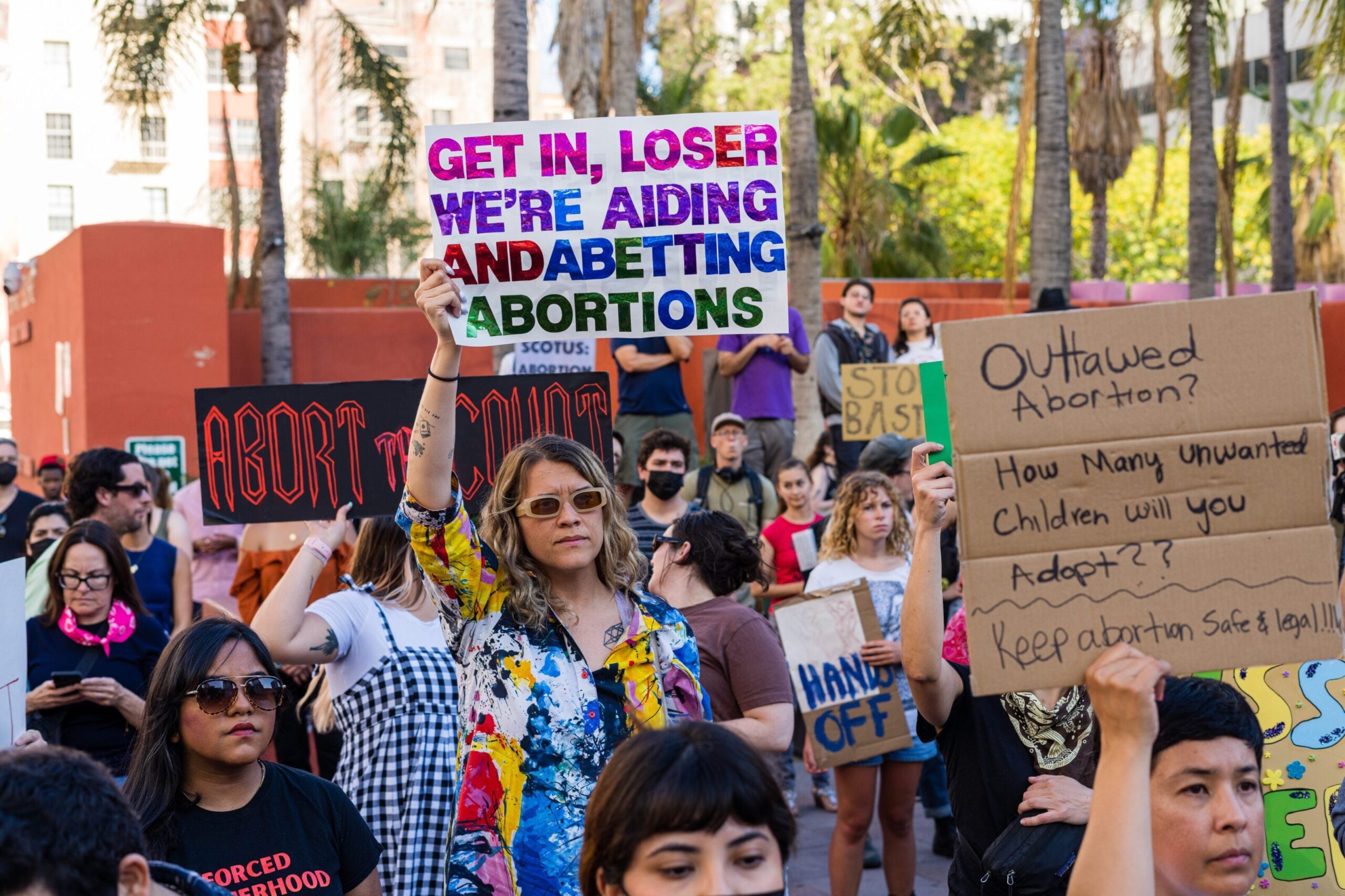
Laws targeting doctors and those who assist in obtaining abortions are becoming more common. In states like Texas and Oklahoma, performing an abortion can result in life imprisonment and hefty fines. Private citizens are empowered to sue anyone who “aids or abets” an abortion, creating a climate of fear that extends beyond health care providers to friends, family members, and even those offering financial support.
Some states are pushing for laws that would penalize residents for traveling out of state for abortions or for helping others to do so. These legal threats create a chilling effect, deterring not just abortion providers but also those offering necessary support and information.
The stakes have never been higher. November’s election will shape the future of reproductive rights for decades to come. Whether through voting, advocacy, or sharing personal stories, now is the time to act. The fight for reproductive freedom is about more than just abortion—it’s about the right to make decisions about our bodies and our futures.
For those of us who have faced these decisions, the impact of losing these rights is all too real. It’s crucial to push back against policies that endanger lives and strip away autonomy. Every vote, every voice, and every story matters in the battle to protect reproductive health care for all.