


“Just get involved!” is the new “Just go vote!”
Pithy adages in this vein are inherently abstract, not particularly inspiring, and—worst of all— repetitive. Have the stakes of the 2024 election motivated you to “get involved” for the first time? Where do you begin? How can you make your biggest impact? Is this work accessible to a complete newcomer? A call to action is only as effective as its context is clear.
White Christian nationalism, the antithesis of our pluralistic democracy, finds its most devious and insidious allies from a mass of well enough-meaning politicos—operatives, party and issues organization leaders, and “stakeholders”—who express opposition to Christian nationalism but haven’t yet lived the mission.
These are the career politicians who believe that talking to voters is beneath them; ambitious campaign managers obsessed with the self-aggrandizing myth of the underslept, overcaffeinated grind culture; self-proclaimed activists who believe that their amateur social media messaging expertise is sufficient to count as “getting involved.” It’s no wonder the standard call to action can feel utterly superficial in the absence of authentic proponents.
For the duration of the 2024 election cycle, the Unreasonable podcast—only a year and a half old now—has pivoted from a robust first season of interviews with esteemed authors, journalists, elected officials, and attorneys to a second season laser-focused on the perspectives of true activists and organizers. It is, of course, essential that the American electorate better understand the decades-long assault on the constitutionally mandated separation of church and state. But far more valuable is understanding the opportunities and resources we can leverage to fight back against the rise of Christian nationalism.
Our team has been traveling the nationwide church-state separation circuit, educating secular and interfaith communities alike on the mechanics of grassroots organizing and election protection. From the American Atheists National Convention in Philadelphia, to the Americans United Summit for Religious Freedom in DC, to the Secular Student Alliance National Convention in Little Rock, the energy is palpable: Conference attendees are passionate about our shared values, and though they are initially skeptical of talking to their neighbors, they tend to be almost immediately reassured by a better understanding of the process.
The hard truth is that making change demands a commitment to interpersonal communication. Unless you have the extraordinary personal finances to donate the sums necessary to make a meaningful dent in a direct mail or TV ad buy (my gripes about the tragic state of U.S. campaign finance law notwithstanding), there are few meaningful ways to impact an election that do not involve some person-to-person interaction.
To many of you, this prospect may be horrifying. If you’re someone who always lets their ringing phone go to voicemail, you’re probably going to have some reticence about making cold calls to voters. If, when your doorbell rings, you tend to hide and peer out the window to make sure nobody sees you are home, you probably aren’t eager to knock on the doors of strangers to talk about the upcoming election. But I have good news for you: It is way, way easier than you think.
Let’s first address the elephant in the room. You’ve all heard the anecdote that, according to some surveys, public speaking is a more pervasive fear than death itself. I would posit that cold-contacting voters to support a political candidate or issue supersedes even the fear of public speaking for most people. It’s a situation that brings up a wide array of common fears—fears of conflict, of failing to “convince” the person, of forgetting what to say. Ironically, rarely does fear for one’s safety come up, though it is by far the most valid concern.
And yet, just a year ago, the Journal of Behavioral and Experimental Economics published a study showing that in a two-way race, a campaign that goes door-todoor, on average, gains six points on a campaign that does not. Let that sink in. That’s a percentage differential of six, at a time when a victory margin of six points is often considered a blowout. So, how do we reconcile the disconnect between the undeniable utility of canvassing and an almost universal aversion to it?
Envision your favorite occasion that involves gift-giving. Perhaps you’re a Jewish atheist Unitarian Universalist who celebrates Christmas like I do. Imagine the joy of giving a loved one something thoughtfully selected, useful, and perhaps enlightening. Meditate on that sentiment, that feeling of delight in generosity. Now, reconfigure the scenario in your mind so that the recipient of the gift is any random person in the neighborhood. You are engaging in an act of kindness to give a gift of knowledge and empowerment. They open the door, disgruntled, expecting a salesperson, and here you are, handing them literature about a candidate who will defend their neighborhood, district, county, state, or country from harm. You are a vessel for valuable information, a volunteer sacrificing your time, energy, and nerve to help them. You ask for nothing in return. It changes the whole game, doesn’t it?
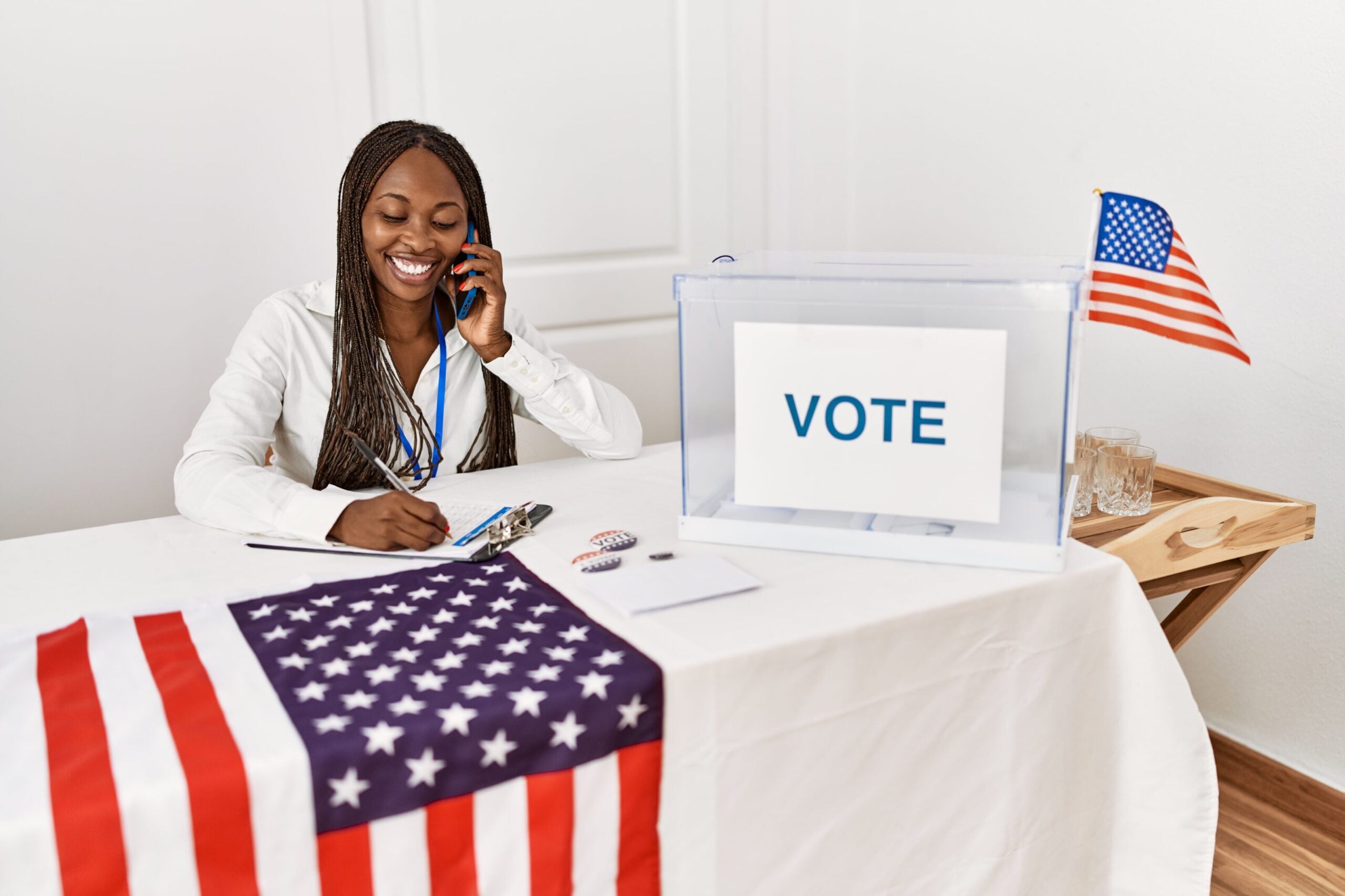
Perhaps I haven’t convinced all of you to become canvassers, and that’s fine. I am a cis, straight, white man, and folks from other groups may be more likely to deal with calls to the police or concerns about walking alone through unfamiliar territory. Some of you may have physical impairments that prevent you from being able to traverse long streets, hills, and driveways without great difficulty. Fortunately, this approach to direct voter contact is no less applicable to phone-banking, text-banking, hosting candidate meet-and-greets, volunteering to serve as a poll worker or watcher, speaking up at local meetings, or registering voters.
The stakes are incredibly high right now, and we cannot take anything for granted. No favorable poll or surge in enthusiasm should mislead us to complacency. We cannot rest easy, believing that enough other people will do this work. Remember that no matter what happens in November, there will be a future. This kind of work is particularly important now, but grassroots activism will always be necessary. Our community in particular, the non-theistic or religiously unaffiliated, remains poorly respected and represented on both sides of the political aisle. We have a long way to go, and we cannot expect meaningful progress unless we all step up in every way that we can.
So, you’ve accepted the call to “get involved.” I hope today is the day you “take responsibility and lead.”
An impassioned atheist who knows how to organize and is willing to put in the work is a religious nationalist’s worst nightmare. That same person organizing and working for our future? What a dream.