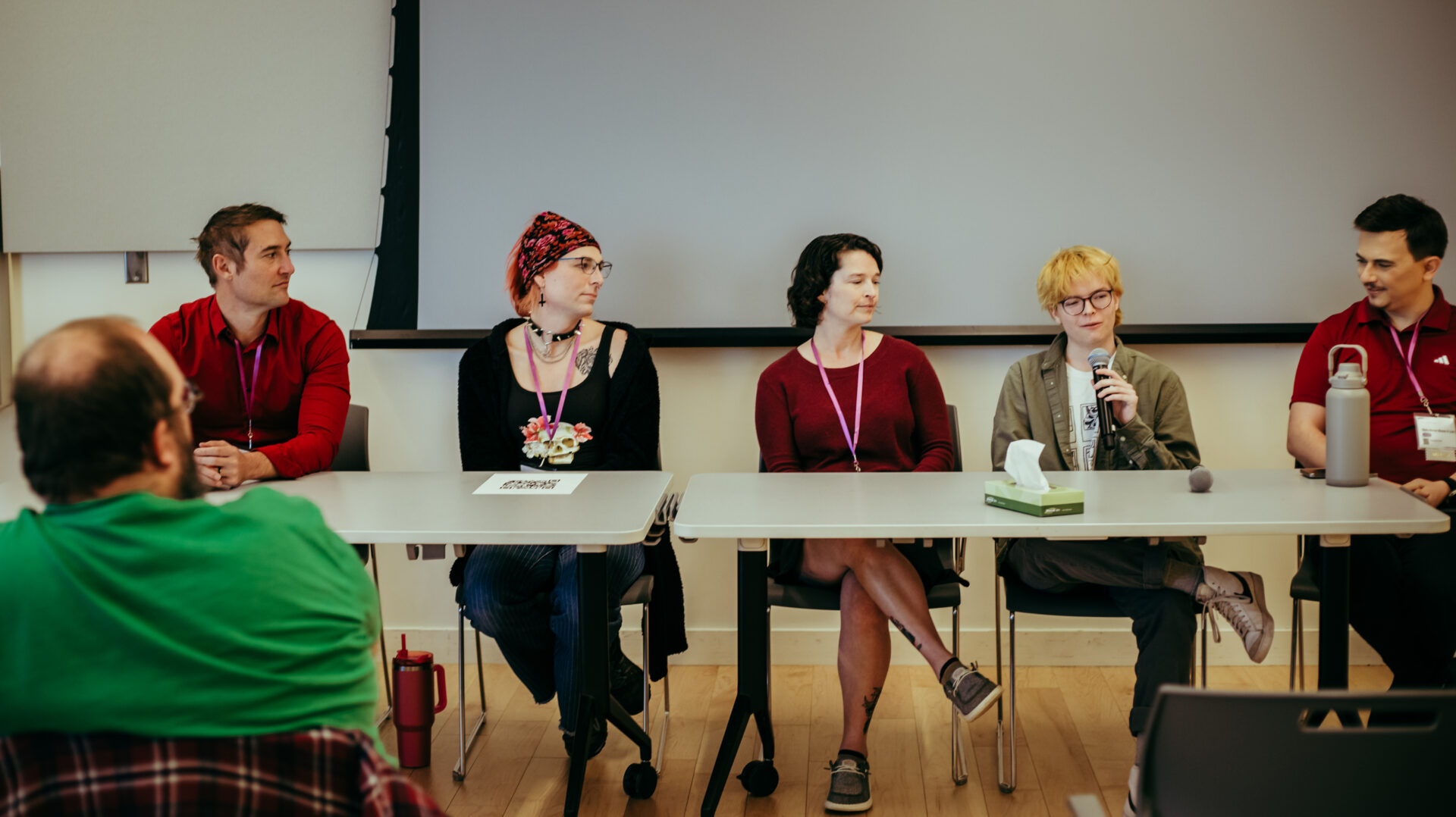
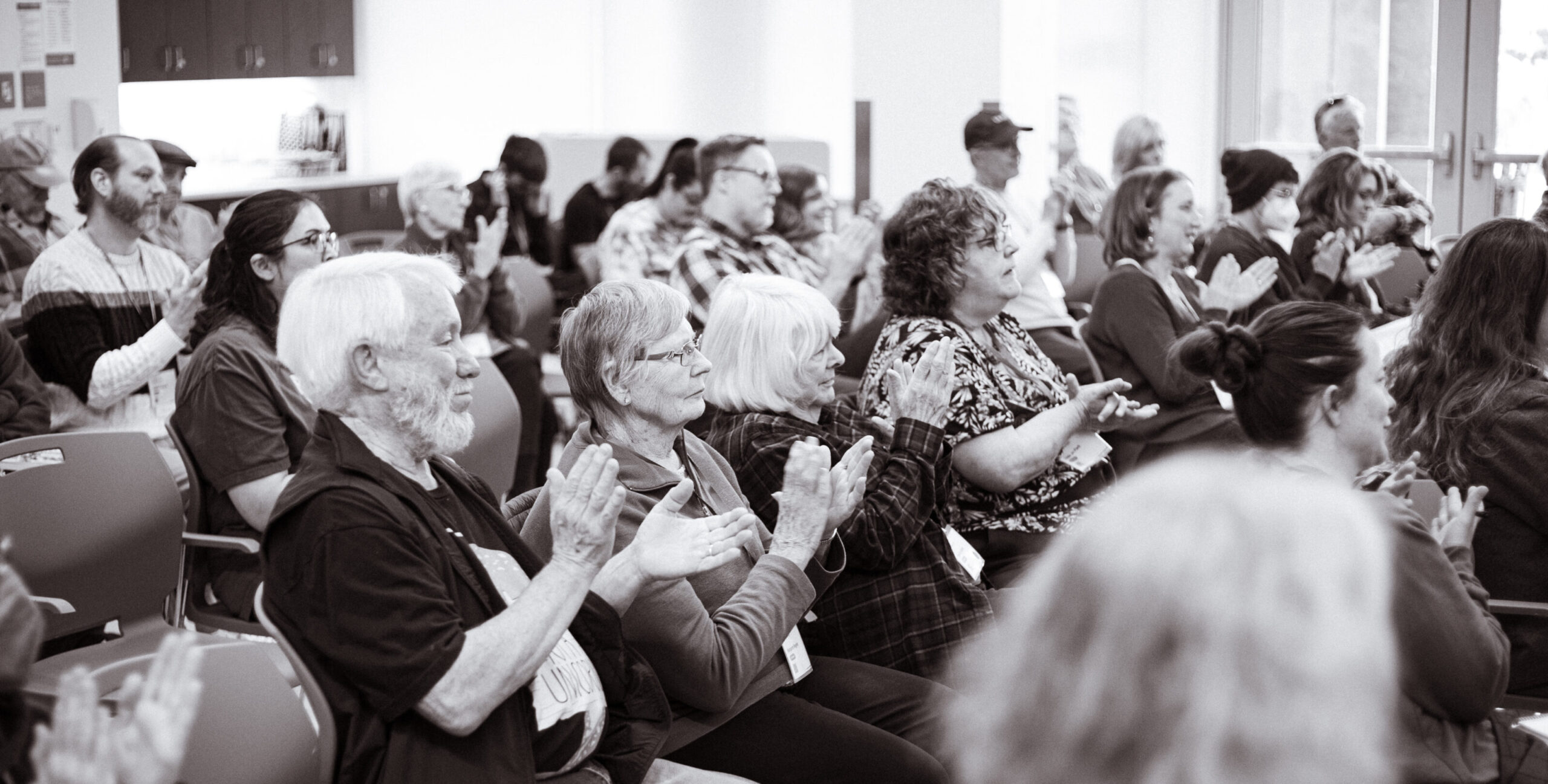
Like most projects, this one didn’t start the way it ended, and there’s a good lesson in that, one that leaves room for future work, and that work also will be work whose final form won’t look precisely how I imagined it, but will instead be the product of a collaborative vision.
It probably never would have happened if, when Stephanie Zvan, Minnesota State Director, asked me what I was thinking once in a quiet moment after another conference, and I said I might be thinking big, she hadn’t responded with, “Good.”
I must also tip my hat to a couple other activists in the secular movement: Devon Graham, Florida Assistant State Director, and Sam McGuire, Director of Community Organizing and Coalitions, who have gifted us all with the anchoring and inspiring mottos of “Step The F*** Up” and “F*** The Bull****, Do The Thing.” In their own spicy ways, they’re telling us the most important thing we can do sometimes is simply show up, be there, and see where that takes us.
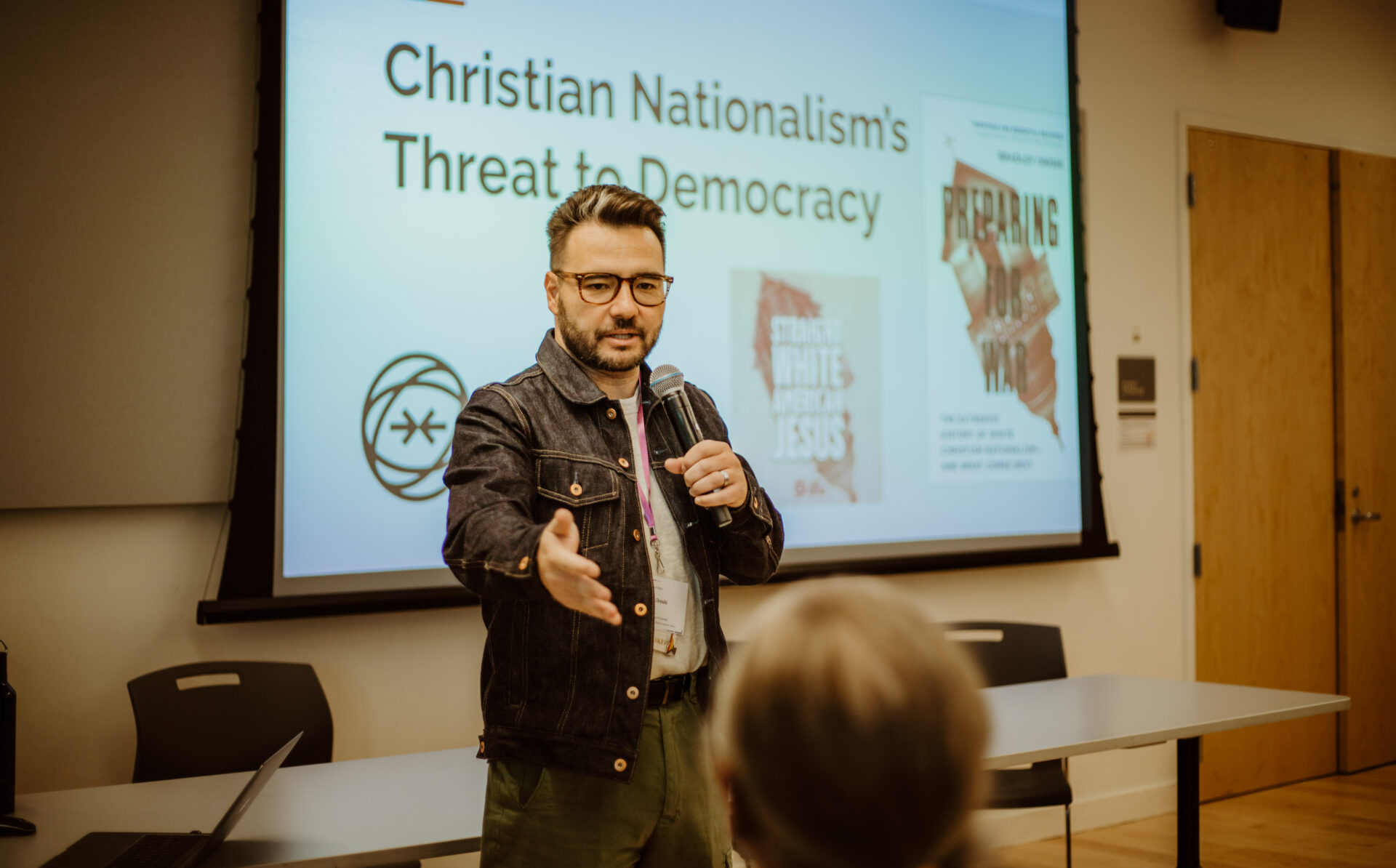
This project, a conference we called Unite Against Hate: Resisting White Supremacy and Christian Nationalism in the Pacific Northwest, was also rooted in my belief in the old truism, as Ta-Nehisi Coates recently reminded me, that the way to the general is through the specific. It’s a belief in the power of local politics, of our own geographical specificities, and thus the value of local and regional conferences about local and regional issues with the power and backing of our national organizations. The way that we might tackle countering White Nationalism and Christian Supremacy in the Inland Pacific Northwest might be different than how, for example, Arizona is doing it, but the examples and comparisons between us are useful, especially so in their specificity and context. This, I think, was a lesson driven home at the American Atheists national conference in Phoenix a couple years ago, when a huge portion of the speakers and panelists were local subject matter experts talking about their communities’ challenges, plans of action, and histories.
When I first moved from Omaha to Coeur d’Alene in North Idaho, I had such a difficult time trying to wrap my head around the cartography of politics up here. It was baffling. But I started trying, both through my traditional methods of reading and research and through new connections with local progressives and atheist groups. The fruits of those connections, while slow to develop and grow, did so in wonderfully rhizomatic fashion. And when COVID hit, somehow that led to those connections multiplying more rapidly in our necessarily digital environments. I got to know some great folks online and learned important lessons about paying attention to (our) local politics.
And then I began to just show up. I went to a library board of trustees meeting. Then I stood up and spoke at one. I kept meeting new people and even summoned the courage to ask them to facilitate introductions to even more people. All of this was taking place as I was deciding whether to try convening all of these people in the same place for a short while.
Not only to inspire, commiserate, or even network—all of which are important in their own right—but also to see if we could put a few more tools into a few more hands for countering these poisonous hierarchies of gendered, raced, sexed, and abled power, power that around here hangs its effectiveness on Christian frameworks. This is absolutely not to let those atheist white nationalist types off the hook. They, too, are relying on proximity to Christian fascist power frameworks for their own power, no matter their theological beliefs.
In other words, this conference was not really for the talkers but for the doers, the boots-on-the-ground folks, the folks interested in translating theory into praxis. I like theory— love it, even—and devote a lot of my reading to it. I often describe myself as a theory-driven person, but it’s that theory as a driver of work that I really love.
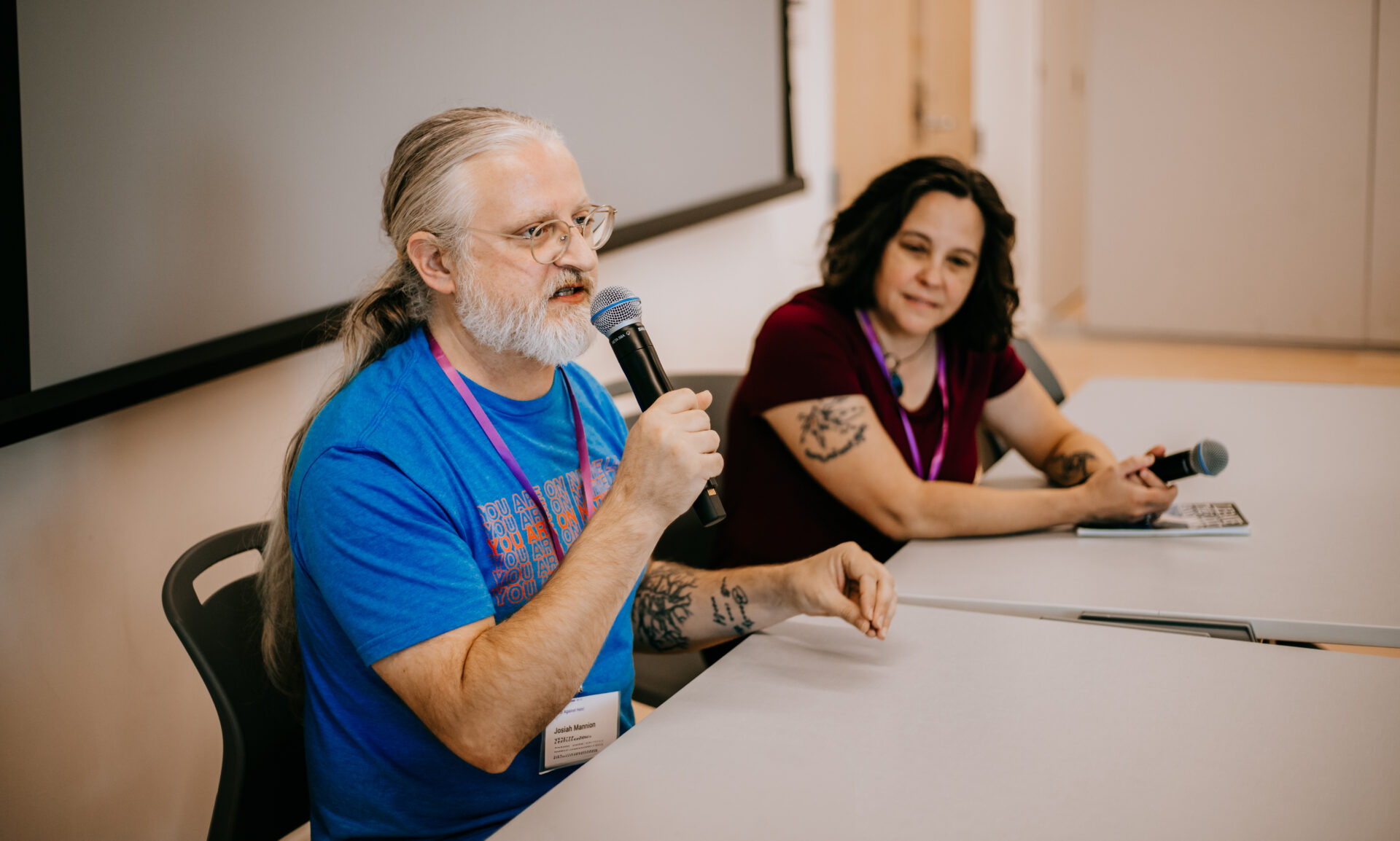
Which brings me back around to where this conference started. I originally wanted the conference to be on two tracks: countering White Christian Nationalism and an underlying, or overarching, project of decolonizing atheism. That latter one is still in the works because it absolutely drives every single thing I do in organized atheism, and it will continue to do so, especially as I think it’s one of the keys to effectively and sustainably countering White Christian Nationalism.
And what about beyond the conference? Because every conference like this is, in many ways, just a starting point, right? There were a lot of people from a lot of different social and activist circles involved in this conference. A lot of connections were made, and now that the elections have gone the way they have, all of those folks from all of those circles are getting a feel for the way forward. To a certain extent, it’s a matter of letting the seeds of those connections germinate and develop as they will without putting the weight of too many concrete expectations on them. However, without putting our feet forward in some direction, nothing will ever happen.
So, what I’d love to see start to happen next is more communication and coordination between the northern and southern half of the Idaho secular communities. We’ve already begun facilitating that in the hopes of coordinating in-person and remote testimony on state legislation. We are also offering the notes, presentations, and resources from the conference to those interested, and we’ve talked about trying to set up conference calls at regular intervals with organizations that have social and religious justice concerns across the Inland Pacific Northwest.
I’d also love to see some of the cross-state connections develop further between organizations in Idaho and Washington to help ensure access to reproductive, trans, and queer health care. I want to see our atheist and secular humanist organizations openly invited to work with religious groups and other community groups who are committed to countering White Christian Nationalism in our communities. And without a doubt, one of the things that buoyed my spirits in the aftermath of the elections has been witnessing the big and small ways people are working to help take care of one another.