

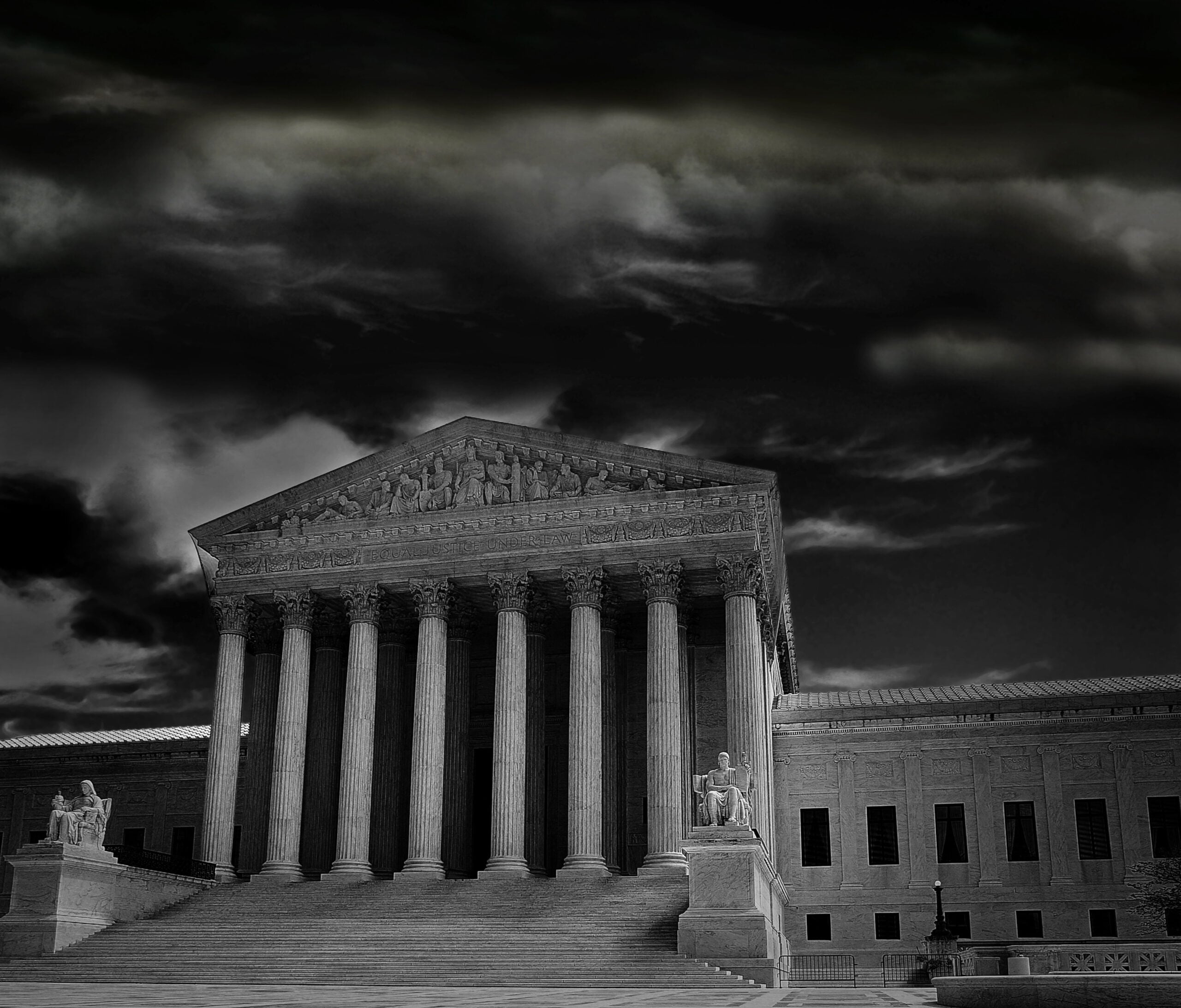
In two decisions this term addressing abortion, Moyle v. United States and FDA v. Alliance for Hippocratic Medicine, the Court has fallen short of protecting Americans’ rights and well-being against abuses by lawmakers enacting policies rooted in Christian nationalism. The Court, while providing some temporary relief, failed to offer long-term clarity in the post-Roe landscape. Furthering this chaos are the Court’s rulings in Corner Post v. Board of Governors and Loper Bright v. Raimondo, two cases that have severely undermined federal agencies’ ability to effectively serve the public.
In Moyle, the Court dismissed an appeal from an ongoing challenge to Idaho’s strict abortion ban, returning the case to the trial court and allowing the Emergency Medical Treatment and Labor Act’s (EMTALA) protections for emergency abortions to stay in effect—for now. EMTALA requires hospitals to provide abortions when the patient’s health is at serious risk. Idaho law, however, prohibits all abortions even if there is a risk of imminent death. Justice Ketanji Brown Jackson’s dissent accused the Court of stalling rather than ensuring Americans have access to necessary medical procedures, writing, “Today’s decision is not a victory… It is delay.” The Moyle ruling leaves unresolved the critical question of whether federal law preempts state abortion bans in medical emergencies, guaranteeing continued uncertainty for doctors and patients alike.
In Alliance for Hippocratic Medicine, the Court rejected a challenge to the Food and Drug Administration’s (FDA) decadesold authorizations concerning mifepristone, a safe and effective abortion medication. The Court determined the doctors who brought the case lacked standing. Put simply: Because the doctors had never prescribed mifepristone, the FDA’s action did not impact them. While the ruling means the medication will remain available to patients for now, the Court sidestepped the substantive issues surrounding the FDA’s authority and provided a roadmap for future challenges.
While both of these decisions provided temporary relief from the tragedy the Court created by overturning Roe v. Wade, they also delayed any major decisions on critical abortion-related issues. This stands in stark contrast to the conservative victories in the Court, such as in Dobbs v. Jackson Women’s Health Organization, which destroyed the Substantive Due Process protections for reproductive rights and undermined the basis of many other important safeguards, including access to contraception and the rights of same-sex couples to marry. The Court’s recalcitrance fails to offer the lasting, institutional safeguards needed to secure these important liberties in the wake of its misguided decisions.
This year, the Court took aim at destroying another set of institutional safeguards: separation of powers. In a separate pair of decisions, Corner Post v. Board of Governors and Loper Bright v. Raimondo, the Court named itself the czar of agency action and administrative law. These decisions will permit bad actors to unleash what Justice Jackson called a “tsunami of lawsuits against agencies.” And when that tsunami hits, the Court now has the final say on any challenged regulation.
In Corner Post, the Court effectively did away with the long-standing six-year statute of limitations for facial challenges to regulations. Instead, the Court said that any entity that is newly regulated, for example because they just came into existence, can have six years to challenge an older regulation. This opens the door for well-funded interests to challenge effectively any regulation and undermines the stability of the law.
The Court made things substantially worse with its decision in Loper Bright. Chief Justice John Roberts’ decision placed judges above the White House and Congress when examining agency decisions that draw on specialized knowledge and expertise. The decision overrules the doctrine of “Chevron deference,” under which the courts would defer to agency interpretations of the federal laws they administer. In doing so, the Court calls into question the congressionally granted authority of every executive agency. This means any question of agency interpretation will now be decided, not by the elected branches of government, but by justices with lifetime appointments. Judges may disregard scientific and evidence-based decisions made by agencies like the Food and Drug Administration, the Environmental Protection Agency, and the Occupational Safety and Health Administration, and substitute their own beliefs instead. All they need is a case before them, and thanks to Corner Post, cases will arrive en masse.
Although it is fortunate the Court did not overturn important regulatory action in both Moyle and Alliance for Hippocratic Medicine, those wins are minor and temporary. Combined with conservative efforts to pack an unaccountable judiciary with extreme ideologues, the Court has created a hostile landscape for agency action and rational policy-making. Starting now, victories must be harder fought and harder won. Given all that is at stake—from abortion access, to the freedom of belief, to the hundreds of thousands of Americans who, as Justice Jackson noted, have been left “in the dark” by these decisions—we must be prepared for a long struggle ahead.
William McCaffery is studying law at the University of Oxford. Annad Khraisat is studying law at the University of Notre Dame. Both were law clerks with American Atheists for the Summer 2024 term.