

Many members of the conservative party in the United States hold ideas that the rest of the western world finds… peculiar. This was made very clear to me recently when reading a statement by House Foreign Affairs Committee Chairman Michael McCaul in which he described Humanists International as an “organization with extreme, ideological agendas… intentionally exporting atheism abroad and distorting religious freedom in a partisan manner.”
At first I thought this was a parody, but it turned out to be all too real. His rantings cannot be dismissed as pantomime or the deranged ravings of an online conspiracy theorist, although that’s how they read. These are the words of a leading politician in a globally hegemonic republic, and they have the power to do tremendous harm.
Of course, McCaul’s irresponsible words were completely untrue. Humanist organizations are not as he describes them, and Humanists International campaigns for the universal human right to freedom of thought, conscience, and religion or belief—including the beliefs of humanists, atheists, agnostics, and anyone who places themselves under the nonreligious umbrella. To campaign for the rights of this vulnerable global minority does not distort religious freedom, it is that freedom’s very essence. Until recently, this would be considered an American consensus.
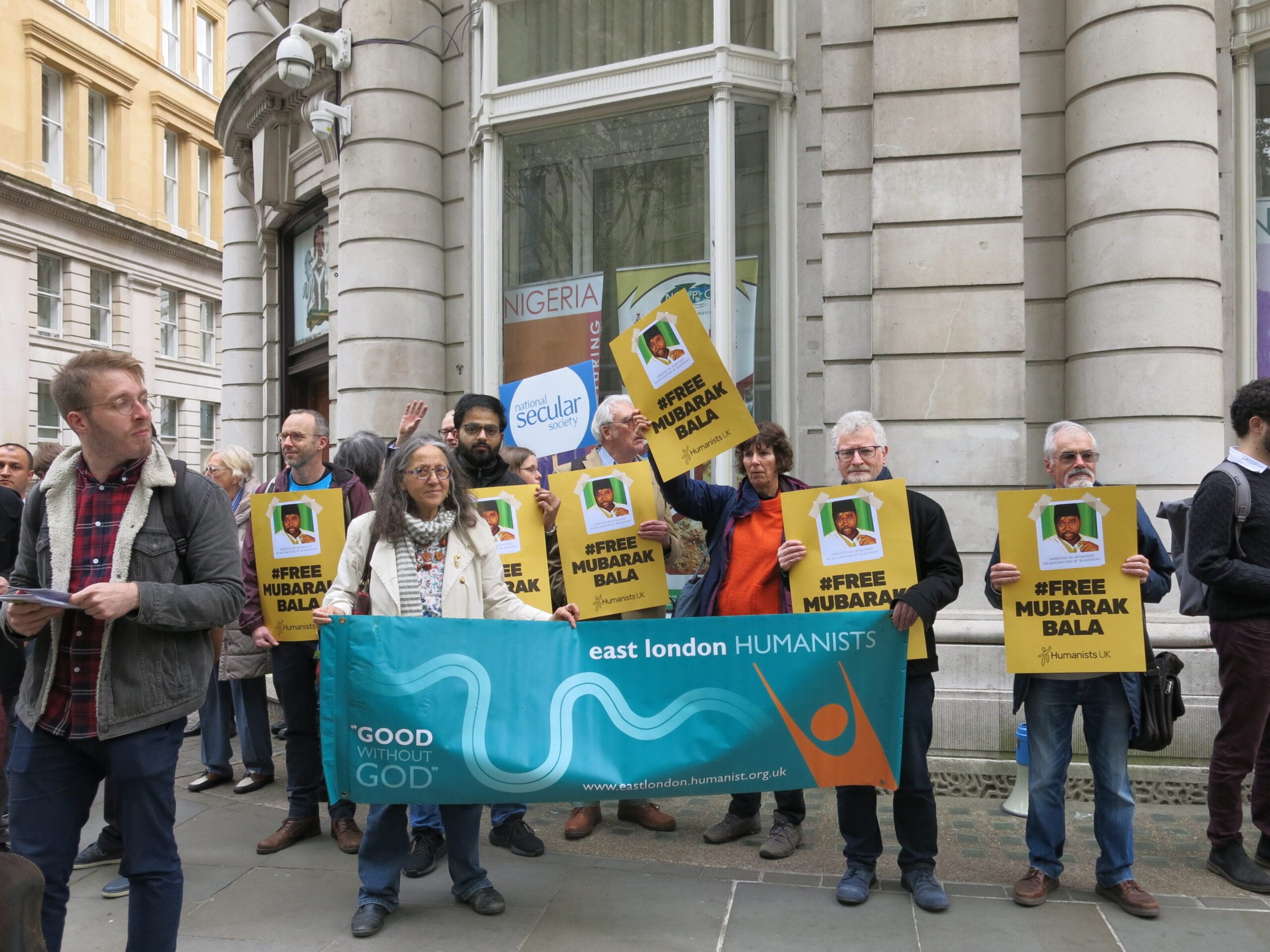
Just four years ago, when humanists sought the support of the U.S. in the case of Mubarak Bala, the president of the Nigerian Humanist Association who was sentenced to 24 years in prison for posting “blasphemous” content on Facebook, we received help on a bipartisan basis. But as Christian nationalism strengthens its stranglehold on the American right, that breadth of support for international freedom of thought is at risk of falling away.
Freedom of thought, conscience, or religion, as set out in Article 18 of the Universal Declaration of Human Rights, is the most basic right of all— the right to your own opinions, to practice your own beliefs, to share them with others in a non-coercive way, and to change your mind. That senior U.S. political figures are targeting organizations championing these rights is of great concern, and it’s also deeply short-sighted.
When these freedoms are denied to one group, all of us are affected. Where we see Christians persecuted, minorities from within Islam—Shi’a or Ahmadiyya, for example—also suffer, as do Baha’is and humanists. Where Muslims are targeted—like the Uyghurs in China—Christians, humanists, and other minorities suffer alongside them. Freedom of belief protects orthodox and established believers as much as it does the non-conformists, the reformists, the minority sects, and the heretics.
There is no doubt the U.S. elections of 2024 are the most consequential for some time, not just for the American people but for all of the free world and for those around the world who aspire to freedom. The U.S.’s support for freedom of religion internationally is not only a matter of upholding a core value of its own republic, but also of maintaining its global standing as a defender of human rights.
Your nation’s record in this mission is by no means unblemished, but it is far stronger than that of many other world powers outside the European Union. As President of Humanists International, I hope— as all humanists outside of the U.S. surely do—to see a renewed commitment to religious freedom. Because without the freedom to think and believe as you will, and to speak your truth, what other freedoms do you have? If the lying fanatics prevail, not many.