


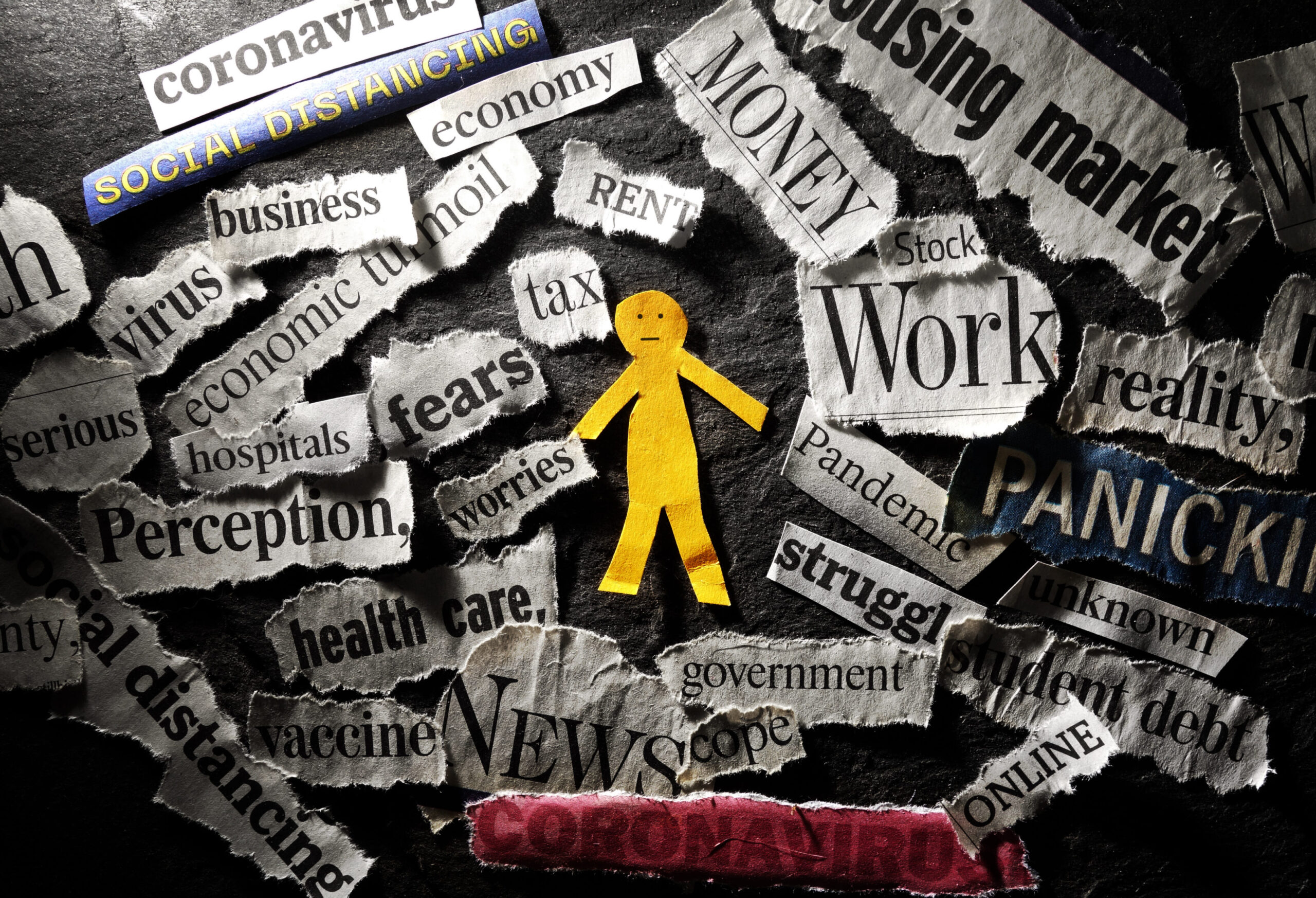
Like it or not, the age of technology is upon us—and with it comes a flood of media shaping how we feel and think. Political crises and social upheaval are amplified at every turn, leaving many of us anxious, stressed, or perpetually on edge. Social influencers, media, and politicians make use of our brains’ bias towards information that can be damaging and nudge us in subtle ways towards an outcome. Threats are exaggerated to leverage an emotional response and pinned to a specific group—whether defined by ethnicity, gender, sexuality, or belief system.
While as atheists we may pride ourselves on critical thinking and baloney detection, we still share the same cognitive hardware. Even after we upgrade our thinking to the latest operating system with god-virus protection, those primal biases can still take hold. In this article, we’ll explore how to stay grounded—especially if you already lean on rational thinking—while navigating a world that seems determined to push our emotional buttons.
Mental Health Impacts of Politics
Being in a persistent state of stress takes a profound emotional and physical toll. Short bursts of stress can be managed if your body gets time to return to its resting state. But prolonged exposure is another matter entirely. It can alter brain chemistry and hormonal states, contributing to depression, anxiety, and a range of stress-related disorders. Even when we recognize these risks, it’s hard to peel our eyes away from the latest disaster, and we often end up doomscrolling ourselves into exhaustion.
Religious folks are often convinced of an advantage by turning to prayer or divine intervention for solace. As atheists, though, we rely on ourselves to navigate the crisis. In times of political upheaval, we don’t have the pseudo-intervention of “thoughts and prayers” to do the heavy lifting; instead, we develop real, evidence-based strategies to help us find relief and move forward. If the goal is feelings of serenity, the advantage of the God believers would be real, but if the goal is an improved world for all, the advantage is back to the atheists.
Rationally Calm
Being rationally calm doesn’t mean ignoring our emotions or becoming “logic-bots.” Instead, it’s about harnessing our emotional responses to inform conscious, practical actions. Emotions, like anger, aren’t bad; they’re signals that something isn’t right. The key is to pause, assess whether the threat is real, and then use reason to develop realworld solutions. We certainly have hopes and dreams, but we don’t rely on wishful thinking alone to create change. Instead, we channel our emotional energy alongside rational strategies to move forward in a meaningful way.
A core tool in Cognitive Behavioral Therapy (CBT) is the thought log. It helps us recognize the connection between our emotions, the situations that trigger them, and the self-talk that follows. When you identify a thought driven by an unhelpful belief, like catastrophizing, you gain a moment of clarity to decide how to proceed. Of course, there’s a fine line between recognizing an actual catastrophe and merely expecting the worst. The goal is to challenge distortions that leave us feeling helpless and instead focus on actionable steps, such as reaching out to a friend, spending time in nature, or engaging in a community group.
Mindfulness is another valuable practice. Some religious traditions might claim it, but you don’t need any religious framework to shift your attention from anxieties about the past or future to what’s happening right now. By training yourself to be more present, you reduce mental noise and regain a sense of control.
It also helps to set healthy boundaries around stress-inducing news, such as scheduling time to be frustrated about politics and permit yourself to vent. It is also essential to set limits on how often you check the headlines. Use “Do Not Disturb” modes or app blockers to enforce screen breaks if this is helpful.
Finally, many messages in the media drive feelings of fear or isolation. Counteract that by getting involved with like-minded groups and communities—secular meetups, volunteer organizations, or social clubs. Restoring a sense of belonging not only boosts your mood but also channels your energy into building the kind of world you want to live in.
Rediscovering Values
A popular exercise at the Recovering from Religion fall excursion involves identifying your core values. Instead of basing your life on what others insist is important, you take a close look at what truly resonates with you. Although “purpose” is often treated like a strictly religious concept, you don’t need faith to live by meaningful principles. When you understand which values guide your choices—and notice where your actions might veer away from those values—you’ll feel more authentically connected with yourself and discover a more profound sense of meaning.
Research on happiness also shows that contributing to the well-being of others can significantly boost your own. Whether it’s volunteering, offering emotional support, or simply telling someone how much their actions matter, you create a mutually uplifting experience. By aligning your values with purposeful action, you nurture not only your sense of fulfillment but the resilience and well-being of those around you.
Facilitating political change can often feel overwhelming, but meaningful progress happens in small, incremental steps. One of the most crucial—yet often overlooked—stages of change is the shift from unawareness to awareness. Because this transformation isn’t always visible, it doesn’t receive much recognition, but it is a necessary foundation for action. Even this awareness builds gradually, as small pieces of information accumulate over time to shape perspectives and inspire movement. It’s important to acknowledge and celebrate these small victories—both your own and those of the people around you—because they collectively drive larger change.
Finding Your Coping Style
Your way of coping is uniquely yours. It could involve journaling, activism, art, exercise, music, nature, therapy—whatever resonates with you. Take time to explore which strategies fit and which ones don’t. If you realize you need help, don’t hesitate to reach out. There are many resources in our secular community ready to offer support.
One such resource is the Secular Therapy Project, which connects people seeking mental health services with professionals who rely on evidence-based, scientific methods. Unfortunately, some therapists do fall victim to the god virus, and that bias can shape their approach. By contrast, the Secular Therapy Project has nearly a thousand vetted therapists—reviewed by a volunteer team of licensed professionals—to ensure they practice from a secular, science-based framework, free from religious influence.
Navigating political turmoil without relying on supernatural reassurances empowers us to seek real, tangible solutions. By practicing “rational calm,” we channel our emotions intelligently, acknowledging valid fears and frustrations while avoiding unhelpful distortions. We ground ourselves in practical tools like mindfulness, awareness of our thoughts and feelings, and active community support. We also find renewed purpose by clarifying our core values and aligning our actions to them. Whether it’s volunteering, connecting with secular organizations, or just taking time to unplug and reflect, these steps cultivate well-being and resilience. Ultimately, facing uncertainty as a freethinker means being grounded in evidence and compassionate communities that support real and lasting change.