The Founders weren’t hostile to religion. They were opposed to tyranny, and they understood a government powerful enough to impose one creed is likewise powerful enough to punish anyone outside it. I’d argue Christian Nationalists also understand this but they actually like the idea of religious tyranny so long as they’re the ones in charge.
Tomorrow, the Trump Administration will do something our country’s founders explicitly rejected.
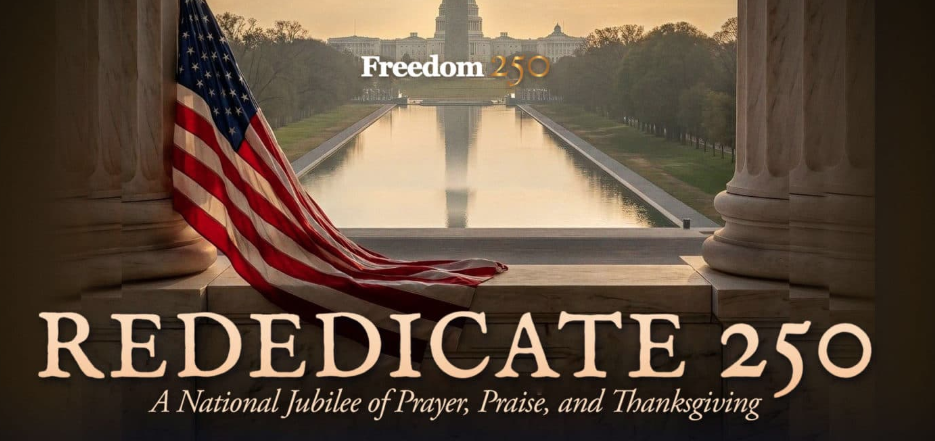
They’re hosting a religious rally on the National Mall to “rededicate” the United States as “one nation under God.” Promoting the gathering earlier this year, the president declared: “To be a great nation, you have to have RELIGION. You have to have FAITH. You have to have GOD.”
Event organizers with “Freedom 250,” a partisan public-private partnership created by Trump outside congressional oversight, are framing their spectacle as a supposed continuation of America’s Christian founding, pointing to a “day of Humiliation, Fasting and Prayer” declared by the Continental Congress on May 17, 1776.
They leave out, of course, that the Continental Congress would go on to establish a secular democracy with a godless Constitution that forbade religious tests for office and a First Amendment designed to prevent the very kind of religious tyranny being staged in our capital.
The Founders knew what happened when governments fused political power with religious authority because Europe had spent centuries drenched in sectarian violence, persecution, and state-sponsored faith. Don’t take my word for it…
The “Father of the Constitution,” James Madison feared religious establishment would allow “the majority” to “trespass upon the rights of the minority,” warning, “Who does not see that the same authority which can establish Christianity, in exclusion of all other Religions, may establish with the same ease any particular sect of Christians, in exclusion of all other Sects?” He was clear that any connection between religion and Government “is injurious to both.”
Thomas Jefferson, whose Virginia Statute of Religious Freedom guaranteed legal equality to people of all faiths and none, wrote that in “every country and every age, the priest has been hostile to liberty.”
Thomas Paine, in his Rights of Man, put it even more bluntly: “Persecution is not an original feature in any religion; but it is always the strongly marked feature of all […] religions established by law.”
The Founders weren’t hostile to religion (though today’s administration would surely accuse them of it). They were opposed to tyranny, and they understood a government powerful enough to impose one creed is likewise powerful enough to punish anyone outside it.
I’d argue Christian Nationalists also understand this, which is why they are so obsessed with stoking fears about Sharia. The thing is they actually like the idea of religious tyranny so long as they’re the ones in charge.
That’s why they are so intent on rewriting history and reshaping our laws to reflect a far narrower, more exclusionary vision of the country. Most of the movement’s leaders know, deep down, they are advancing a myth when they promote the idea of a Christian nation. But they are so desperate to make it real because then, and only then, can they dominate. And if your goal is domination, of course neutrality feels like a loss and diversity is a threat. White Christian Nationalists aren’t confused about secular governance or pluralistic values; they are opposed to both and, fundamentally, to the Founders’ vision of American democracy.
“Rededicate 250” is neither a celebration of religious freedom nor some harmless worship service. And it is certainly not a bipartisan, inclusive commemoration of the Founders’ commitment to religious pluralism. It’s an unconstitutional, taxpayer-supported, government-sponsored sectarian revival featuring Cabinet officials and some of the most extreme Christian Nationalist figures in the country.
The extremists gathering tomorrow may be loud, powerful, and backed by billionaires, media empires, and the machinery of the federal government, but they are not the majority.
Just this week, Pew Research released a new survey that found only 17% of Americans support declaring Christianity the official religion of the United States. A supermajority say churches should stay out of politics, and more than half believe “conservative Christians have gone too far” in trying to impose their beliefs on others.
Persisting despite all evidence and public resistance is part of a long Christian Nationalist tradition. From colonial-era proposals to Christianize the government, to post-Civil War efforts to amend the Constitution, to Cold War moral panics, to today’s coordinated religiopolitical campaign, the pattern is familiar: a relentless effort to replace religious pluralism with religious preference.
But just as consistently, these campaigns have fallen short — thanks to the Founders’ foresight and the fighters, like us, who just as relentlessly defend the Constitution.
While this weekend’s revival is the next chapter in a long campaign, it is different — and far more dangerous. The religious radicals have made it to the main stage, with the full backing of the federal government, lending an air of legitimacy and normalcy to an agenda that is anything but democratic.
Because America doesn’t belong to the grifters who claim god gave it to them. It belongs to all of us. And there has never been a more urgent need to re-separate church and state before those who would rewrite our history succeed in rededicating our government to their god.
Nick Fish is the president of American Atheists. He has more than a decade of organizing, advocacy, political, and public policy experience with some of the nation's most prominent civil rights and civil liberties organizations.
Nick Fish is the president of American Atheists. He has more than a decade of organizing, advocacy, political, and public policy experience with some of the nation's most prominent civil rights and civil liberties organizations.